Education
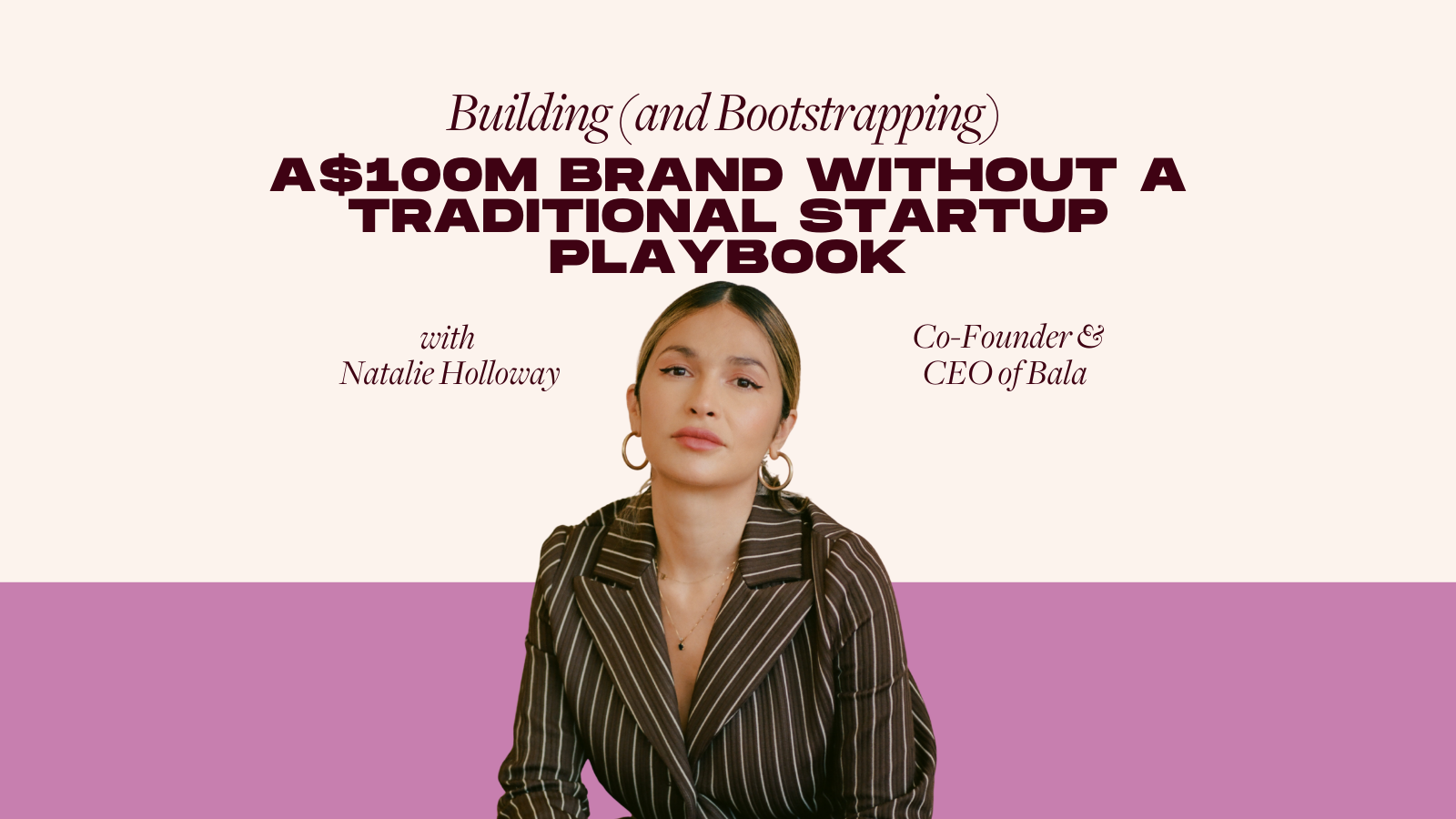
Replay: Inside Bala: Building (and Bootstrapping) a $100M Brand Without a Traditional Startup Playbook
At Female Founder Collective’s The 10th House, we often talk about the different paths founders can take to build a successful consumer brand. While venture capital and rapid scaling dominate the conversation, there’s another path that’s just as powerful—one built on discipline, creativity, and learning how to do more with less.
In our conversation with Natalie Holloway, Co-Founder and CEO of Bala, we explored what it actually looks like to build a breakout brand without relying on a traditional startup playbook. From launching with just $5,000 to scaling Bala into a global business with over $150 million in sales, Natalie’s journey offers a clear example of what’s possible when founders prioritize product, brand, and operational discipline from the beginning.
What stood out most is that Bala’s growth wasn’t driven by a single breakthrough moment. It was the result of a series of intentional decisions—testing early, staying lean, and building systems that could support long-term growth.
Start With a Product That Actually Needs to Exist
Bala didn’t start as a business plan. It started as a problem.
While traveling through Asia after leaving their advertising careers, Natalie and her co-founder Max realized that the fitness tools they were using—specifically wrist and ankle weights—hadn’t evolved in decades. They weren’t functional, they weren’t aesthetically appealing, and they didn’t match the way modern consumers wanted to move.
Instead of creating something entirely new, they redesigned something familiar.
That decision—to innovate within an existing category rather than invent a new one—became a key advantage. It allowed them to tap into an existing behavior while making the product feel fresh, elevated, and relevant.
Just as importantly, they didn’t rush to scale the idea. After returning to the U.S., they spent two years prototyping while working full-time jobs, treating Bala as a side project before committing fully.
Their first real validation didn’t come from investors. It came from customers.
Launching on Kickstarter allowed them to test demand, refine their positioning, and fund their first production run without taking on unnecessary risk. It was a reminder that early traction doesn’t have to come from capital—it can come from clarity and proof.
Why a Co-Founder Changes the Game
One of the strongest perspectives Natalie shared was her stance on co-founders.
While she acknowledges that building with a partner—especially a spouse—can be challenging, she’s a strong advocate for having another “real adult in the room.” Not necessarily for the earliest stages, but for the long-term sustainability of the business.
As companies grow, the emotional and operational demands increase. Having someone who can balance energy, challenge decisions, and complement your strengths becomes critical.
At Bala, that dynamic is clear. Natalie leads brand, marketing, and operations, while Max focuses on product design, finance, and legal. While those roles have evolved over time, the foundation has remained the same: clear ownership paired with flexibility.
In the early days, they both did everything. Over time, they shifted into a true “divide and conquer” model—rarely in the same meetings, doubling productivity, and trusting each other’s decisions without needing constant alignment.
That level of clarity doesn’t just improve efficiency. It creates momentum.
The Hiring Mistake That Changed Everything
Like many consumer brands, Bala experienced rapid growth during COVID.
Revenue jumped from $2 million to $20 million in a single year—and with that growth came a wave of hiring. Teams were built quickly, roles expanded, and the company began operating like a much larger organization.
But when the market corrected, the reality set in.
Natalie described having to let go of nearly the entire team, scaling back to just the core founders and one key employee. It was a difficult reset, but it led to one of the most important operational shifts in the company:
You can operate much leaner than you think.
Today, Bala runs with a small internal team supported by agencies and contractors. Hiring is intentional, slow, and followed by a period of adjustment before adding anyone new. The goal isn’t to build a large team—it’s to build the right one.
That shift reflects a broader lesson: growth doesn’t always come from adding more people. Sometimes it comes from building better systems.
Scrappy Marketing Is Still One of the Most Effective Strategies
Before Bala had a marketing budget, they relied on what Natalie described as “guerrilla marketing.”
Instead of spending on ads, they focused on partnerships, collaborations, and community-driven growth. They reached out to dozens of brands—often targeting companies slightly larger than themselves—and proposed specific, mutually beneficial ideas.
Not every outreach worked. In fact, most didn’t.
But enough did.
That approach allowed Bala to tap into new audiences without spending heavily, while also building brand credibility through association. Over time, those partnerships compounded into meaningful exposure.
The key wasn’t just reaching out—it was coming prepared.
Having a clear idea, a simple concept, and an easy “yes” made all the difference. And equally important was the mindset: rejection wasn’t a signal to stop, it was part of the process.
Brand Is What Makes You Recognizable at Scale
One of Bala’s biggest differentiators isn’t just the product—it’s how the brand shows up.
From the beginning, Natalie and Max made a conscious decision to position Bala at the intersection of fashion and fitness. That meant rethinking not just the product design, but the entire visual identity.
Photo shoots looked like fashion campaigns. Styling choices were intentional. Colors were limited and consistent. Materials, like silicone, became part of the brand’s signature.
Over time, those decisions created something harder to define—but easy to recognize.
As Natalie described it, the goal is to build a brand that people can’t quite explain, but instantly feel.
That level of consistency doesn’t happen accidentally. It comes from making clear choices early—and repeating them often enough that they become synonymous with the brand.
Scaling Means Building Systems That Support Growth
As Bala expanded, one of the most important decisions was diversifying revenue channels.
Instead of relying on a single source, the business grew across direct-to-consumer, Amazon, and wholesale—creating a more balanced and resilient model. Today, those channels contribute relatively evenly to overall revenue.
One of the more innovative moves was treating wholesale customers like DTC customers.
By building a Shopify-powered B2B portal, Bala allowed wholesale partners to shop directly, removing the need for constant sales support and making the process more scalable. It’s a simple shift, but one that reflects a deeper principle: systems should reduce friction, not add to it.
That same mindset applies across the business. Whether it’s negotiating contracts, testing new tools, or adjusting strategy mid-stream, Natalie emphasized that flexibility is key.
Nothing is permanent. Everything can be revisited.
Final Takeaway: Build for Longevity, Not Just Growth
What makes Bala’s story compelling isn’t just the scale—it’s how it was built.
Without relying on heavy outside capital, the company was forced to make disciplined decisions early. That meant testing before committing, staying lean longer than expected, and building a brand strong enough to stand on its own.
It also meant embracing uncertainty.
Natalie shared that many of the decisions she’s made as a founder have been wrong—but making them quickly, learning, and moving forward has been more valuable than waiting for certainty.
That mindset is what creates momentum.
For founders building today, the takeaway is clear: there is no single path to building a successful brand. But the ones that last tend to share the same foundation—strong product, clear positioning, thoughtful growth, and the ability to adapt along the way.
If you want access to more conversations like this—plus the frameworks, resources, and community to help you build a fundable brand—head inside The 10th House.
Your Invite to 10th House: A Community that Fuels Your Journey
At Female Founder Collective’s 10th House, we exist to democratize access to the strategies, insights, and connections that have traditionally been locked behind closed doors. Our community fosters authentic connections, celebrates victories, and shares honest advice, creating a space where founders can grow together.
As a member of The 10th House, here’s what you can unlock:
- Direct access to industry leaders who meet you where you are and give candid, real-world advice.
- Supportive workshops, resources, and frameworks you can apply the same day.
- Opportunities to connect with founders who celebrate your wins and help you through setbacks—with zero judgment, just true understanding.
- Front-row seat to future events like our intimate fireside chats, founder cohorts, and exclusive pitch demos.
Apply now below to join our vibrant community and unlock the resources, insights, and connections you need to scale your entrepreneurial journey. Let’s build the future, side by side 💌
Apply for 10th House Membership
What's Next?
Become a part of a community of like-minded female founders. Inside The 10th House, you’ll find fellow founders, investors, and above all, a community.
Filed in: